Showing posts with label 评论. Show all posts

Thursday, March 22, 2012

最近


I managed to muddle through the first two parts of the Western Canon (Harold Bloom) before finally deciding to throw in the towel, for the moment. Clearly, I’m not ready for this tome, which is not to say I didn’t take anything away from it. At least I can now manage to pull off a decent literary-name-dropping. =.=

Anyhow, I’m going to go on a paperback reading spree to unwind my head a bit, focusing on the thriller/suspense genre--my all time favorite. Let it be a lesson to never pick a random paperback from library shelves without first reading some reviews on the author (but in my case, the reviews I would later read are just as misleading). The random paperback I happened to choose is Urge to Kill (John Lutz). I'm not familiar with this author at all, but the cover looked promising. Boy, was I wrong. What a royal waste of three half-days. So I'm going to lash out a bit to make myself feel better.


                                      ★ 1/5
This is by far THE worst thriller/suspense paperback I’ve read. After finishing the book, I was rendered speechless by all the disappointments I felt toward this book, I had to go on Amazon to see what other readers felt about it. To my utter surprise, Urge received an average 4-star from about 30 readers. 30 is not many, I know, but still, what have you people been reading to give this book a 4 star?! Some headings from their comments include “Lutz always rocks”, “keep you on the edge of your seat”, “urge to read all Lutz books”. Well, if this kind of writing is supposed to keep me on the edge of my seat, the fact that I'm a loyal fan of Preston and Child would have made me leaping out my second-floor window half a dozen times already, out of genuine terror. Honestly, a few of their books DID keep me on the edge of my seat, and made me stare, wide-eyed, underneath my sheets after turning off the light (I often read them right before hitting the sack).


Urge falls flat on almost every front it's kind of unbelievable this book was actually published in this state. Maybe when rookies become veterans, readers (the ones who decided to stay around) become more forgiving and don’t really care anymore, acting out of simple habit to keep on reading their favorite authors? I suppose I can relate to that, since I have read every single Pendergast episode by P and C, even though a few of them clearly pale in comparison to the Relic, the Cabinet of Curiosities, and A Still Life of Crows. But over the years, I have built a certain level of confidence with regard to their writing and storytelling skills that even though sometimes they fail to pull out all stops, every P and C book still manages to land safely without crashing. But the case with Urge was quite different. NOTHING about this book impressed me. The writing is forgettable to say the best, redundant, all-over-the-place, and slightly affected. The smart-ass remarks did not impress in the beginning and got on my nerves as the so called “story” unfolds.


My greatest problem with the Urge is the story itself and how it is told. The idea that wealthy men who excel at safari-hunting and can’t hold back their overflowing male pride involve themselves in some kind of modern-day dueling contest in NYC is actually something very workable. But Urge manages to cast a dull and boring light over everything. And NYC's "Best", the team of exceptional and seasoned detectives (Frank Quinn-the protagonist, Pearl, and Fedderman) that gets recruited whenever high-profile cases occur, is the team of most inept detectives I’ve ever read. What exactly does this team contribute to solving the gruesome murders (the 25-caliber-dueling murders and the Slicer murders)? NEXT TO ZILCH. That’s right, the murders basically unfold as God sees fit and eventually get solved themselves. The detectives are too busy worrying about their smart-ass remarks, love affairs, and whether or not a mole on the nape could lead to malicious cancer (I’m not kidding).


The Lavern Neeson sub-story is another reason the Urge fails as a whole. Lavern Neeson almost becomes one of Slicer's prey if it weren't for the fact that she is a long time victim of domestic abuse. The Slicer, likely being a perfectionist, only chooses "prime meat", so he lets Lavern go without harming her. One brief chapter is more than enough to recount and wrap up Lavern's major lucky break. But the author, defying explanation, goes on and on about Lavern’s struggle against male abuse and her eventual triumph over self-degradation.


These random offshoots contribute nothing to advancing the case and just kind of trail off, leaving behind an awkward mess. It is not that thrillers can’t raise issues of social concern, it’s that these social concerns are MISSING THE POINT of the story, and making the storytelling incredible loose and all-over-the-place.


I also found it a bit far-fetched that the entire NYPD finds it acceptable to let Quinn and the murderer engage themselves in a final showdown of dueling, claiming it to be the ONLY way to solve the case. OH, and did I mention the NYPD decides not to back Quinn up in any way, and basically just sits back to enjoy a wild-wild-west show?


“Urge to read all Lutz books”? No, thank you. Next time, I will try my luck with a Connelly or a Baldacci.

Monday, December 5, 2011

readings happening and waiting to happen

The New York Trilogy (Paul Auster)
This book, my first experience with Auster, turns out to be a tremendously slow read.  I don't think it's the book, it's probably just me still recovering from post-travel languidness.  I've seen the name Paul Auster come up in one of my favorite blogs and mentioned by one of my favorite authors (Murakami) with high regard, so naturally this is a must read.  But I picked up this book at the wrong time.  If I were to read it when I'm in my Murakami mood, I'd finish it in a few days, but lately I've been in the mood for something less "weird".  Weird is probably the first word that comes to mind with the New York Trilogy, but being one of Murakami's favorite authors, this is no surprise.

Homer's Iliad (Robert Fagles)

Finally, taking my first humbling bite at classic Greek literature.  This is a relatively new translation by Robert Fagles.  Started this book about a week ago, still working through the introduction by Bernard Knox, which turns out to be very informative and for the most part newbie friendly, except for the first section on the "true origin" of the Iliad and on the tradition of bard singers.  I am thinking some interesting thoughts about Greek gods and goddesses, or rather Homeric gods/goddesses about how "worldly" and "ungodly" they all behave.  Much more on this book later.


Books waiting/screaming to be read, and they WILL be read.

A Game of Thrones (George R.R. Martin)
This book is sitting squarely and conspicuously on my desk, screaming to be read. 


Diablo Archive
I have been wanting to try this for a long time.  Everyone knows Blizzard makes good games, let's see if it also tells good stories.  My gut feeling is it does.   


Cold Vengeance (Douglas Preston and Lincoln Child)

Yes, this is one of those series where whenever a new one comes out, I just buy without asking questions.  This, however, does not mean I'm completely without doubts.  After the last one flopped towards the ending, I'm hoping this one is not another let-down.  (P.S., I am skimming through A Still Life without Crows, again, boy I'm falling for A.P. all over again~~~)

Friday, August 5, 2011

Brothers

This film blew me away. I remember when I first saw its poster at the subway station closest to my office, I thought this looked like a good film, not just because of its head-turning, beautiful cast (Toby McGuire, Jake Gyllenhaal, Natalie Portman), but also that the poster exuded something like a powerful undercurrent. There was certainly a pulling force.


Sam Cahill (Toby McGuire) and Grace Cahill (Natalie Portman) are happily married with two lovely daughters, the image of a poster-perfect family. Aside from having a beautiful wife and children, Sam is a strong-willed, responsible marine captain, eager to serve his country, and loves his fellow soldiers. In short, he is the son that makes all parents proud. Along comes “Uncle Tom” (Jake Gyllenhaal), Sam’s younger brother, the black sheep of the Cahills who can’t seem to get his life in order and has a strained relationship with everyone in the family, except his brother Sam, who genuinely cares for him.


The story begins with Sam about to be dispatched again to Afghanistan, and Tom on parole from serving his time in prison for assaulting a woman (I think). At first it took a little bit of getting-used-to to see the three of them taking on the roles of parents and uncle. But they are very convincing, comfortable in their roles.


Something goes terribly wrong in Afghanistan, Sam is assumed killed in action, but is in fact captured by the enemy and imprisoned in a dark cell for months. The family grieves, and all of a sudden, Tom “grows up” and steps up, lending a shoulder and comforting presence to the devastated Grace and the two girls. Just when the long time strained relationship between Tom and Grace seems to take a turn for the better, and a spark of affection materializes between them, Sam is found and rescued, and he comes back.


But he comes back a changed man, a ghost of his former self, scarred for life from physical and mental tortures endured during his captivity. For me, from this point on, the “real” drama begins. And Toby McGuire BLEW ME AWAY with a gripping performance, delivered with such jarring, and sometimes terrifying force. Of course, both Portman and Gyllenhaal are stellar, but it’s McGuire that really makes this film take off. I could hardly believe my eyes how very different he looks after he comes back. His face almost distorted, his gaze unfocused but intense at the same time, his eyes glassy, and his limbs wiry (a sharp contrast to before), and his gait unnatural. All of his physical changes effectively echo a deeply wounded and suffering soul. He becomes unreachable and almost like a shadow, whereas Tom becomes a bit too comfortable assuming the central male role of the family.


The two little girls deserve a special applause! They don’t pale at all, acting alongside McGuire, Gyllenhaal and Portman. The scene of Isabella’s birthday dinner, oh gosh, I was holding my breath throughout that entire scene, just waiting for her to drive Sam over the edge.


The only thing I felt debatable is the ending. It felt too abrupt, almost like the filmmakers cut off the real ending and decided, “ok, we will just end here.” But everything that builds up to that point is just amazing.


The story of “Brothers” is not original; the film is an American remake of a Danish film. The Danish film, from what I’ve heard in filmmakers’ commentary, seems to have a slightly different take, focusing more on the illicit relationship between the Tom character and the Grace character. The American version probably toned it down, shifting the focus to family. But whether this film intended to or not, it does send a powerful anti-war message, what war could do to a man. A film is a wonderful thing when good looks and good acting are aligned.


Monday, August 1, 2011

Match Point

It is interesting watching Match Point right after watching Brideshead Revisited (2009).  In Brideshead Revisited, Charles Ryder (Matthew Goode) reminds me of someone I know, but there is no resemblance whatsoever with that same person upon seeing his performance as Tom Hewitt in Match Point.  This indeed proves Goode is an excellent actor.  But he merely plays a supporting role in Match Point.  It is through him that the real protagonist Chris (Jonathan Rhys Meyers) is introduced to a lifestyle of luxury and comforts, his career and future secured by marriage to the all-too-common (but sweet) Chloe Hewitt.  But of course, this is all too good to be true.

Meyers delivers a satisfactory performance.  Its his solo show, really.  But overall, the film suffers from a rather commonplace plot, IMO.  About half way through, I thought, please let there be a murder, or else it would just be such a boring story.  And I was not disappointed.  I rapped my desk with glee (not decent, I know) when the scene came up where Meyers starts fumbling in his father-in-law's shotgun room.   I can't explain why but I was rooting for him to get away with the whole clumsy murder of Nola -- the victim of every man's lust.  I think its because he's such a mediocre and pathetic person that he deserves to get away with it and live his rather mediocre and pathetic (though rich) life into his ripe old age.  I find no one particularly likable in this film.  The Hewitts strike me as careless, heartless and stupid people, living naively and unintentionally, robbed of sensibilities only those who climbed up from below could understand.  Nola is a hapless tragedy who always has everything to lose, and who just can't seem to cling to something better.  And Tom (Goode) is mostly just in the background, serving as a contrast to Meyers, who has to juggle a dozen things at a time to hang on to his hard earned place.

Meyers is the only interesting character, comparatively speaking.  But he is not the first of his kind and he won't be the last.  He stands to lose everything, just like Nola.  The only difference between him and Nola is that luck seems to be on his side. 

At some point in the film, Meyers confides his problems to a friend, and he talks about his feelings towards the two women, Chloe and Nola, calling one "love" and the other "lust".  There is certainly a lot of lust in the film.  But I didn't find an iota of love, not from Meyers, not from Tom, not from Nola.  There is no genuine affection in this film, only a chockfull of greed, vanity, stupidity and smallish people.  Though Chloe's feeling towards Meyers may be genuine, but she is just too a-dime-a-dozen to be likable, a sweet and simple little thing, having everything and anything she desires only because she has the right papa to secure her happiness.

Thursday, July 21, 2011

Recent readings

As always, I have too much on my plate.  But I seem to be building up a nice rhythm lately.  I have been making the best use of local libraries, and since I kind of got myself into a "classic frenzy", libraries are the best places to find them.  If nothing else, libraries always have a respectable shelf of essential classics.  The one that is closest to my office is a tiny library, but it has an impressive A to Z classic collection. =) 

But that doesn't mean I'm not reading anything else.  There's been a rekindling of interest in Japanese novels/short stories/mysteries, so I currently have these books I'm about to read (finished one of them, actually):

《千年繁華-京都的街巷人生》(壽岳章子)

While I was browsing the shelves at Flushing Library, this book immediately had my attention.  There is nothing extraordinary about a travelogue of Kyoto, that is to say, it is as extraordinary as the next travelogue of any other place.  But what makes this particular book stand out is the carefully drawn pencil sketches of everyday scenes of Kyoto, which accompany the texts.  The sketches (I think they were done using graphite or maybe charcoal) are endearing, and they somehow make the texts more enticing.  I haven't really begun this book, but a quick skim was enough to show that the writing is typical of Japanese female writers -- soft, exquisite, devel-in-the-detail.  The book was written almost a century ago, but as a travelogue, it is still very relevant.  I think the author wrote not so much about the places themselves as her family which spent their lifetimes in this ancient city that bears so much weight from its past.

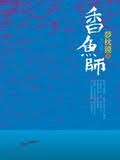
《香魚師》(夢枕貘/ばく ゆめまくら)

I've been a long term fan of Baku Yumemakura's Onmyoji series (陰陽師).  It is rare that I happen to like every form of adaptation of a piece of work, but in the case of Onmyoji, it is pretty much the case: I like the original stories themselves written by Baku Yumemakura, I like the manga series created by Reiko Okano (岡野鈴子), and I like the movie adaptation with Abe no Seimei played by Nomura Mansai (野村万齋).  So I am eager to try some of Baku's other books.  This book seems to be about fishing sweetfish (ayu/Plecoglossus altivelis).  But its not about fishing at all, its about the people who go fishing.

《東京奇譚集》(村上春樹)

If nothing else works, pick anything by Murakami Haruki.  I've not read ANY of Murakami's short stories, so I thought I'd give it a try.  I've only read the first story in this little collection, but already, there seems to be a personal connection.  I wrote a short blog about sometimes, there are signs around us that if you watch or listen carefully, you might catch them.  I don't know if the signs are always there, but for myself, I don't pay attention to them unless I'm in some sort of dilemma and I can't straighten it out, and then I seem to find these little signs.  These signs guide and advise, and heeding them might turn out to be significant, or not in one's life.  So anyways, the first story in this collection has to do with signs in our lives. 

《分身》(東野圭吾)
Higashino Keigo's works are not new to me.  The well-known detective drama "Detective Galileo" (神探加利略)was based on his books.  Actually, after seeing some of his photographs, I sensed a slight resemblance between him and Masaharu Fukuyama (福山雅治)--the actor who played Professor Galileo!!!  How uncanny!!  I finished reading Bunshin (分身).  The truth is, this book actually made me feel sick towards the end.  The book touches upon the highly controversial issue of human cloning.  The rather taken-it-for-granted tone with which the author tells the story about the repeated cloning of a woman in the book makes me queazy.  I understand this book is essentially a mystery thriller, and that cloning is merely a piece of the bigger puzzle necesary to unfold the mystery, but still, I felt a bit repulsed by it.  I read another of his book a while ago and loved it immensely:

                                              《名偵探的守則》(東野圭吾)
This book is essentially a satire -- a self-deprecating piece of work about the entire mystery genre.  The author tells about 15 short mystery stories, each is used to demonstrate a "classic trick" in the book, and then the author goes on to ridicule how cliche and old these tricks have become and that it is a wonder why the mystery genre continues to thrive.  While some of the short stories can be altogether dismissed as sketchy, a few indeed surprise readers with smart contraptions and saucy tones.

Wednesday, July 13, 2011

Growing up with animation

During a child’s formative years, what could be the single most media related influential factor? For me, the answer has always been cartoons (comic books included), or, using more Japanese-oriented terms—animations and manga books. I mean, of course a child is only as good as the product of his/her parents, schools, peers and overall surroundings, but these things take a backseat to the one thing that speaks most directly (and often most effectively) to a child – cartoons. A child is, after all, a child. And an adult is, often case, just an extension of his childhood. You want to make a kid listen? Better say it through cartoons. You want to send a message? Preach a lesson? Say it through cartoons. But as soon as cartoons become overtly educational, it becomes tedious. Good cartoons never try to teach, but they always get the job done anyways. And some cartoons just aren’t educational, but they remain top on many kids’ list of favorites for years, if not for their lifetimes.


China is by no means anywhere near the front of the line when it comes to the cartoon industry. For decades, the two obvious cartoon/anime powerhouses have been Japan and the States. Us post-eighty’s generation (I’m strictly speaking, post-seventies, but I consider myself post-80s) grew up watching many imported cartoons from these two countries. But for us, we still cherish the memory of some decent domestic cartoons. I doubt the same is true for post-nineties and the millennium generations. Their formative years, and inner psyches, to the best of my knowledge, have been dominated by imported cartoons.


Domestic cartoons have never been as good as they once were in the eighties. Many of which I watched dozens of times whenever they were being shown on TV. To name a few:


Legend of Sealed Book/天书奇谭
 
The three fox-demons are especially memorable: the croak fox clad in black -- the treacherous leader of the group;
the vixen fox clad in pink;and the retard Taoist fox who can't even speak intelligibly, =)
 
 
Havoc in Heaven/大闹天宫
 
I believe Havoc in Heaven made use of the best animation techniques Chinese animators possessed at the time.  This animation inspired Japanese animators who later made big names for themselves, notably, Osamu Tezuka (手冢治虫)。


Monkey King and the White-bone Demon/三打白骨精
I shuddered every time I watched this as a kid.
 
 
Magic Paint Brush/神笔马良
 
The story of a kind-hearted young man who stood up to corrupt local officials with the help of a magic paint brush.


The Sage of Mt.Lao/崂山道士
 
I always felt sorry for the young Taoist who lost his hard-earned skill of walking through walls after his heart harbored the thought of using this skill to do evil deeds, like stealing things.
I wish we will see more puppet animations of this sort.
 
Nezha Conquers the Dragon King/哪吒闹海
Nezha is my favorite Chinese animation.  It is so genuinely Chinese in its making in every aspect and in the message conveyed.  And Nezha in this film is such an endearing character.  I really think I can write a 20-page paper on the subject of "On Filial Piety in the Chinese Culture -- an in-depth study of Nezha".
 
These titles are familiar to probably every post-eighties born in China. We grew up watching them, feasting on them with our young minds and enthralled by their intricate storylines, three-dimensional characters, images drawn with exquisite care, and occasionally insinuating lines or gestures we were too young to understand. But these were cartoons that had us on our knees, cartoons that have altogether vanished for over two decades now, cartoons that can be (proudly) labeled “Chinese”.  


That marked the conclusion of my love affair with domestic cartoons. Ever since then, I’ve been immersed in, predominantly, Japanese animation. Animation is, simply speaking, a way of life for the Japanese. I learned just earlier today that lately there has been an “anime-nized” version of Japan’s Constitution published in Japan, on the cover of which are several anime girls with, what else, generous boobs, blond, blue(??) and reddish-brown curly hair, and they are clad in rather dubious outfits. So, the Japanese obvious takes animation very seriously. And I think that is the precondition to making good animation. Animation permeates every nook and cranny of the Japanese society. And I will give you a big round “O” and a look of contempt if you still hold the notion that Japanese animation are exclusively for kids. The ones I grew up watching contain stuff that are, by conventional standards, definitely not suitable for young children, but we watch them anyways, and we love them anyways, and most of us turn out to be okay adults. To name a few:


Doraemon (機器貓/小叮噹)

One of my favorite childhood animes, along with 一休and花仙子.


DNA


This anime wouldn't have made my list of most memorable animes other than the fact that this is the first anime I watched as a "grown-up", hence it represented an initiation for me.  DNA has a very strong sexual undertone.  I probably wouldn't care for this anime now, but back then, I wasn't very selective.


Rurouni Kenshin (浪客劍心)
I lost count how many times I've watched Kenshin (anime and manga).  Kenshin's archenemy is a mummy-like guy called Shishio Makoto (志志雄真实), back then I had no sympathy for this ultimate villain, of course.  But now, I can't help but wonder whether there might be a shred of truth in what he believes.  Though without a doubt, I will always be a staunch supporter of what Kenshin stands for. =)


Yu Yu Hakushou(幽遊白書)


You know, I never really had a thing for "girl anime", its always combat animes or animes with enticing story lines that draw me in.  and btw, my favorite character from Yu Yu Hakushou is Hiei (飛影)


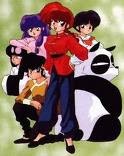
Ranma ½ (亂馬1/2)
This is one of those animes that doesn't take itself too seriously.  I love watching Ranma while eating, it always gives me a good appetite. =)


Hikaru no Go (光之棋)
If I have to name one Japanese animation that means the most to me, it would be Hikaru no Go.  It brought out the writer in me.


 Cowboy Bebop

Talk about an anime that boasts attitude!
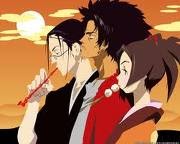
 Samurai Champloo

Life is but a chance encounter
Stale Dango
The Gaze of sunflower samurai


Mushishi(蟲師)
This is not anime, it is philosophy


and of course, animated movies by Miyazaki and Studio Ghibli

Sometimes I wonder why Japanese animations get all the applause and attention. I mean, we just can’t help but love them. The answer is of course manifolds, I could probably write a thesis paper on this. But to wrap up in a nutshell, I’ve always felt that Japanese animations, at least the ones geared more towards younger audience, are made with the clear understanding that kids are NOT dumb. Just because animations are more likely to be watched by kids (barring, possibly, Japan), does not mean animations should be dumbed down and scrutinized for inappropriate content with a fine-toothed comb. If an animation is politically correct to the letter, it is probably unwatchable.

And that's just one of the notable problems with Chinese animations today. They are too condescending, and they are so appropriate for kids, “protecting young hearts and minds from the ugliness out there” that they have become irrelevant and ridiculous. Kids nowadays are simply too smart/sophisticated (be it a good thing or not) for these animations. Secondly, they are Japanese-animation wannabes but fail miserably. This is truly sad, and it’s only a peep-hole revealing a sorry larger picture -- China today is in a culture-void, a ship that simply can’t find its anchor (but, another time perhaps on this). Look back to the eighties, we had something we can truly call our own, animations that have a timeless quality.